
01
Recognition
Milad Ahmadipour - Co-Founder and CTO of SynapseCyber
I turn complex technical ideas into secure, working products.
Across cybersecurity, AI, software, infrastructure, networking, and hardware.
Muscat, Oman

Selected evidence
Work, leadership, and recognition.
Three concise signals from the public record.
How I can help
From technical uncertainty to a buildable system.
Choose the engagement closest to the problem in front of you. Each starts with the real environment, constraints, and desired product result.
01
Product and System Architecture
- Ideal for
- Founders and teams shaping a complex product before implementation expands.
- Deliverable
- A clear product boundary, system responsibilities, information flow, and technical direction.
Product strategy / Architecture / Multidisciplinary systems
Discuss this engagement
02
Cybersecurity and Edge Products
- Ideal for
- Products operating close to networks, devices, and security-sensitive environments.
- Deliverable
- An edge-oriented product architecture connecting protection, analysis, management, and infrastructure.
Cybersecurity / Edge systems / Hardware integration
Discuss this engagement
03
AI and Infrastructure Integration
- Ideal for
- Teams that need AI to operate inside a reliable, secure, and maintainable technical system.
- Deliverable
- An integration plan for AI workflows, backend responsibilities, deployment, and operational control.
AI systems / Backend / Linux infrastructure
Discuss this engagement
04
Technical Advisory and Architecture Review
- Ideal for
- Existing products that need an independent technical view before a major decision or rebuild.
- Deliverable
- A structured review of architecture, risks, operating constraints, and practical next steps.
Architecture review / Technical strategy / Product leadership
Discuss this engagementThe Architecture of a Complete Product
Technology is the thoughtful assembly of human intent, hardware execution, and architectural resilience. A system must be understood across all its layers.
Align the customer need, operating constraints, technical architecture, and delivery path.
What I handle
Product boundaries, user journeys, system requirements, technical priorities, and prototype scope.
Why it matters
A coherent product prevents individual features from pulling the architecture in competing directions.
Translate complex system operations into clear, responsive, and accessible tools.
What I handle
Information hierarchy, interaction states, responsive behaviour, accessibility, and interface performance.
Why it matters
The value of a sophisticated system is lost when its users cannot understand or control it.
Create the dependable application layer connecting data, business logic, APIs, and system state.
What I handle
Backend responsibilities, data flow, API boundaries, service integration, and maintainable application structure.
Why it matters
A stable backend keeps product behaviour predictable as integrations and operational demands grow.
Integrate analysis and decision-support workflows into a controlled product environment.
What I handle
AI integration, analysis workflows, internal knowledge systems, agents, and security-aware product boundaries.
Why it matters
AI becomes useful when its inputs, outputs, infrastructure, and human decisions form one accountable workflow.
Build the Linux, hosting, storage, and deployment foundation required to operate the product.
What I handle
Linux services, hosting control planes, deployment environments, storage, email and DNS infrastructure, and operations.
Why it matters
Infrastructure determines whether a product remains reliable, maintainable, and controllable after launch.
Connect components securely across physical, logical, local, and edge boundaries.
What I handle
Network design, traffic context, routing, device communication, edge connectivity, and operational visibility.
Why it matters
Networking is the communications backbone shared by every software, security, and hardware layer.
Define the protection boundary, security responsibilities, threat controls, and safe operating model.
What I handle
Security architecture, network defence, automation, AI-assisted analysis, and secure infrastructure decisions.
Why it matters
Security works best as a property of the whole system rather than a feature added at the end.
Connect software and infrastructure to edge devices, electronics, and real operating environments.
What I handle
Prototype hardware integration, Raspberry Pi and embedded systems, electronics boundaries, and network appliances.
Why it matters
Hardware decisions shape deployment, performance, maintenance, and the limits of the software above them.
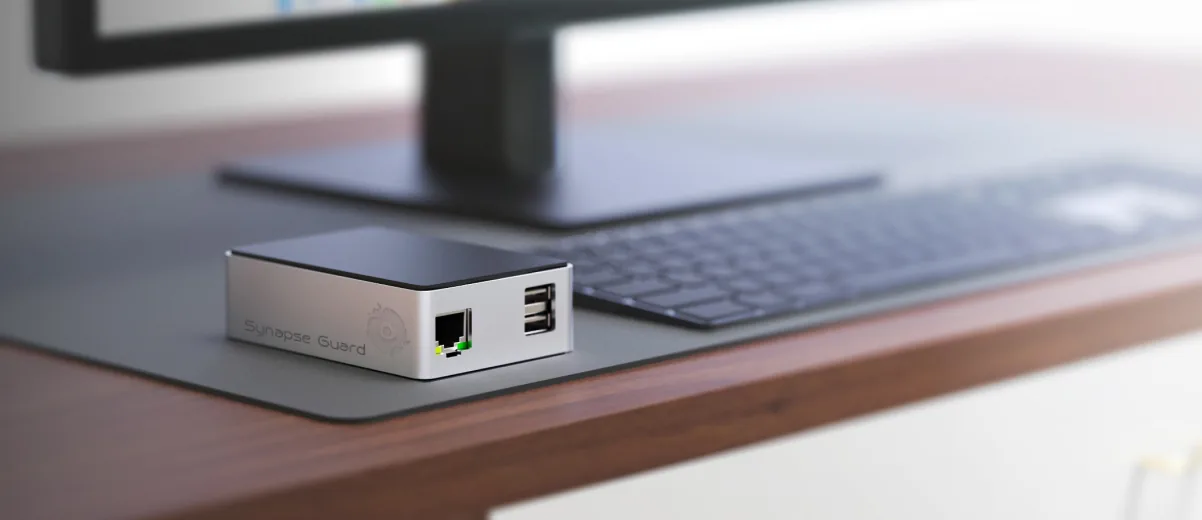
SynapseGuard
An AI-assisted edge cybersecurity platform for small and medium-sized businesses. Milad designed its technical architecture and led development of the prototype and core infrastructure.
- 01Business problem
- 02Architecture
- 03Prototype
- 04Current status
- 05Recognition
Exhibition & Recognition
View All Archive →First Place Winner - Omantel AI Hackathon 2025
Omantel Innovation Labs / Omantel
Participant - Omantel Cybersecurity Startup Bootcamp 2026
Omantel Innovation Labs / Omantel
Guest Speaker - Cybersecurity Essentials for the Future Accountant
University of Technology and Applied Sciences, Muscat
Engineering Philosophy
I work best where software, infrastructure, AI, security, and real-world constraints must become one coherent product.
My approach is rooted in the belief that the invisible layers of infrastructure must be as refined as the public surface. Every architectural decision is a balance of performance, security, and human experience.
Read the full story-
01
Discovery
Define the outcome, users, operating environment, constraints, and security boundary.
-
02
Architecture
Assign system responsibilities, product boundaries, information flow, and technical direction.
-
03
Prototype
Build the essential technical path and test the assumptions that carry the most risk.
-
04
Validation
Evaluate integration, usability, and behaviour against realistic operating conditions.
-
05
Hardening
Improve security, reliability, performance, maintainability, and operational control.
-
06
Delivery
Turn the validated architecture into a buildable, understandable, and maintainable system.



Collected from original sources
Prompt Library

Premium food × typography editorial poster template
Create a premium vertical food editorial poster combining photorealistic hero-dish photography, oversized high-contrast serif typography, authentic ingredient details, food-inspired color, believable depth, and luxury commercial art direction.
0 copies
0 people found this useful

Silent-era dream sequence template
Create a dreamlike silent-film portrait or scene using early-20th-century grain and scratches, faded monochromatic color, and delicate accent hues.
0 copies
0 people found this useful

Haunting illustrated Polaroid template
Create a Polaroid-style image of a chosen subject using hauntingly beautiful illustration, exaggerated scenes, and depictions of urban life.
0 copies
0 people found this useful