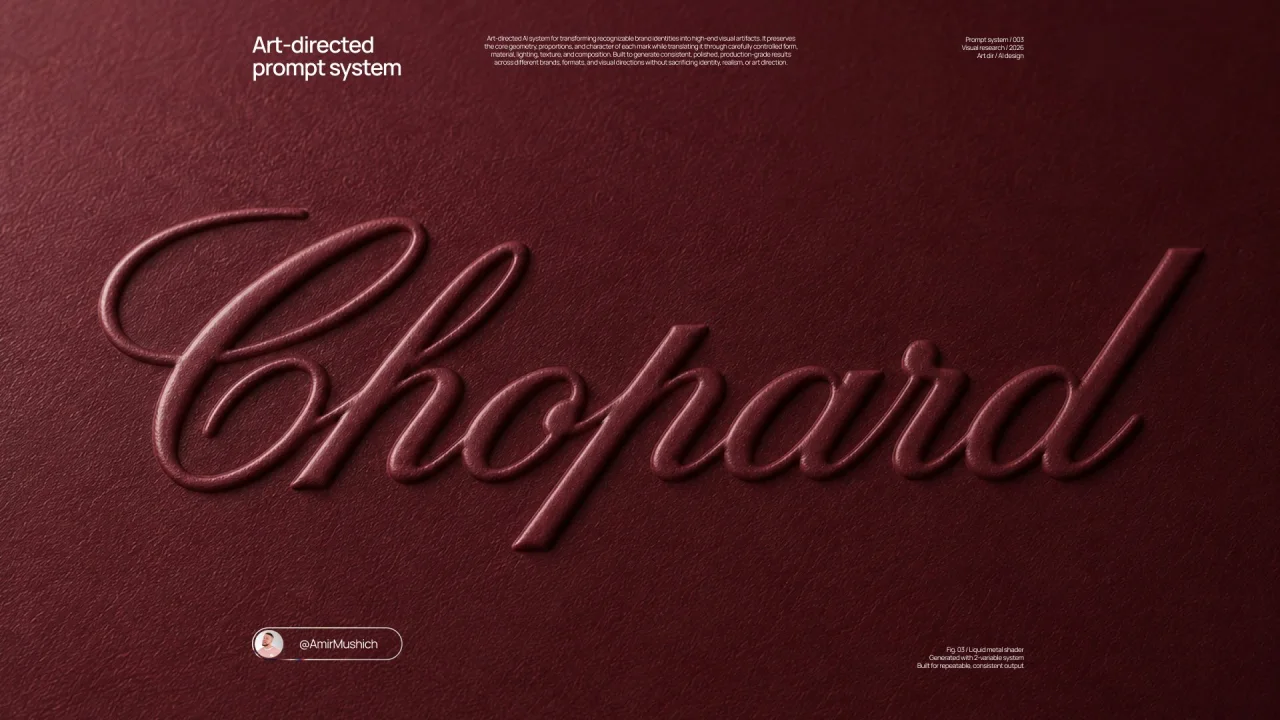
Brand logo paper emboss
A 3-variable GPT Image system that turns any brand logo or wordmark into a realistic blind emboss on premium paper, with full logo or editorial close-up framing.
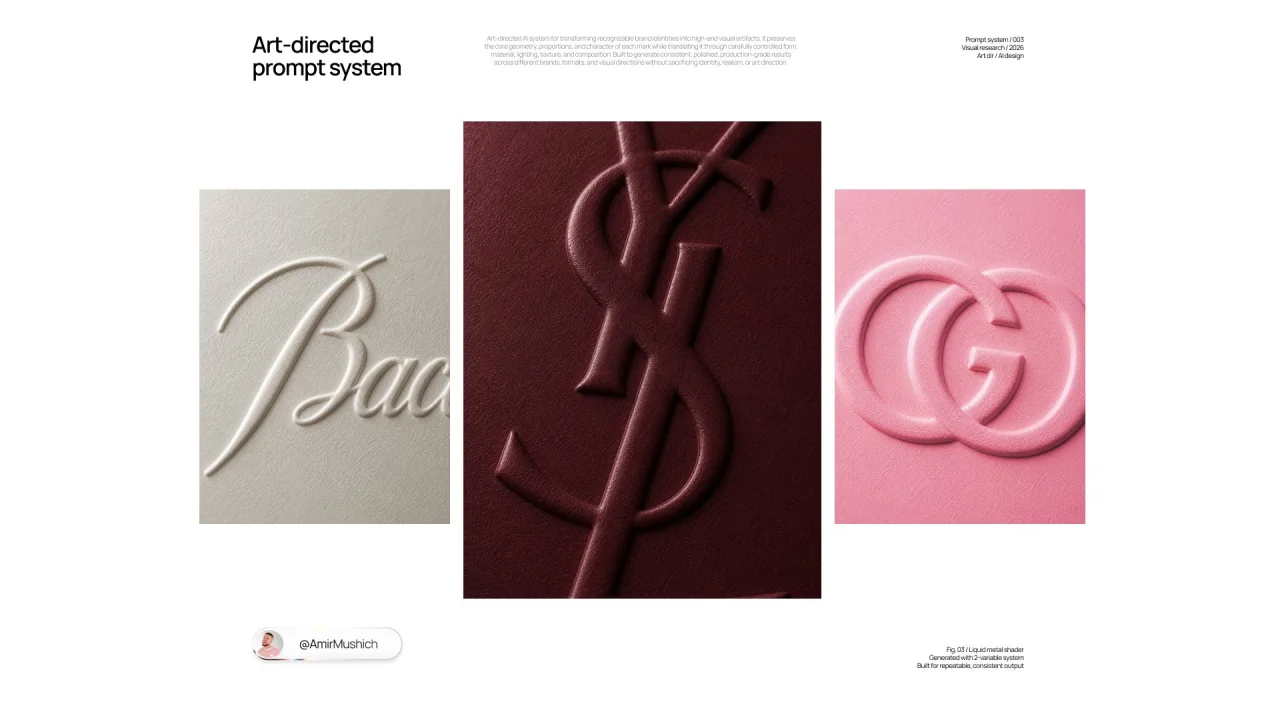
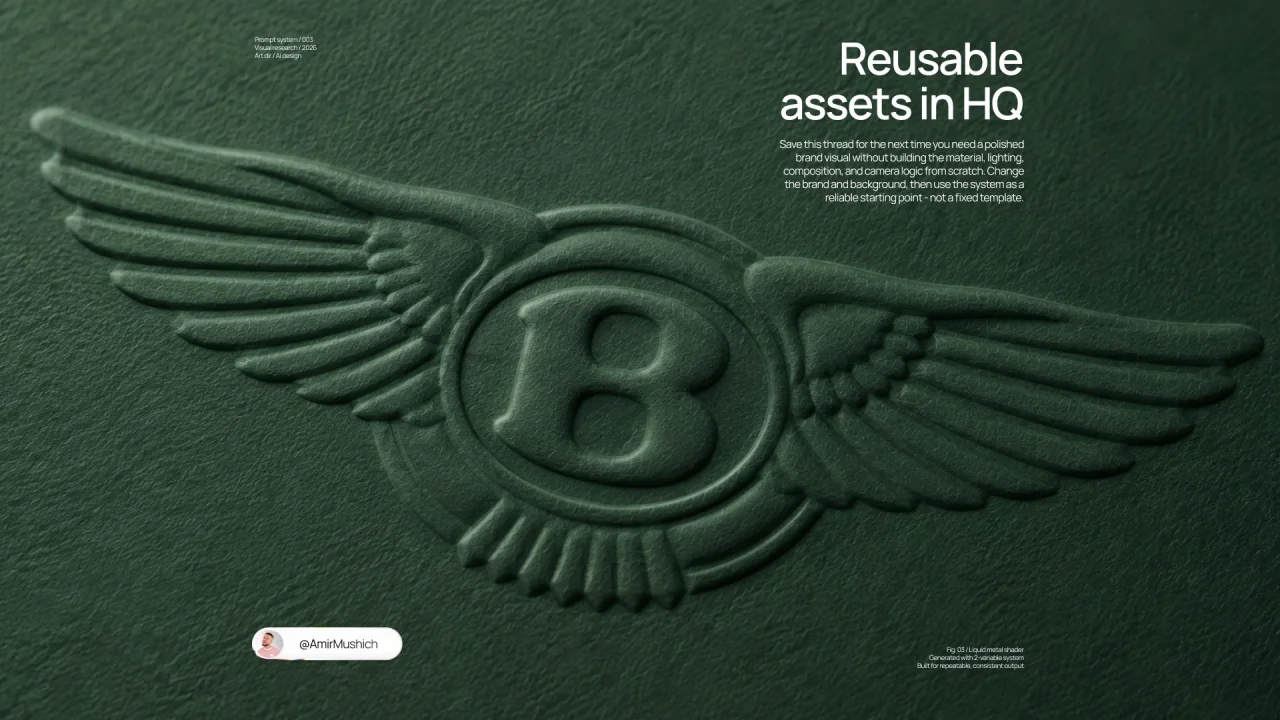
Ready to use
Prompt
Art-directed prompt system [v_04] / GPT Image/NBP

3-variable prompt system — turns any brand logo/text into a realistic embossing. Change the brand, surface color, and choose full logo view or directed close-up.

[BRAND NAME = ______]
[PAPER COLOR = _____]
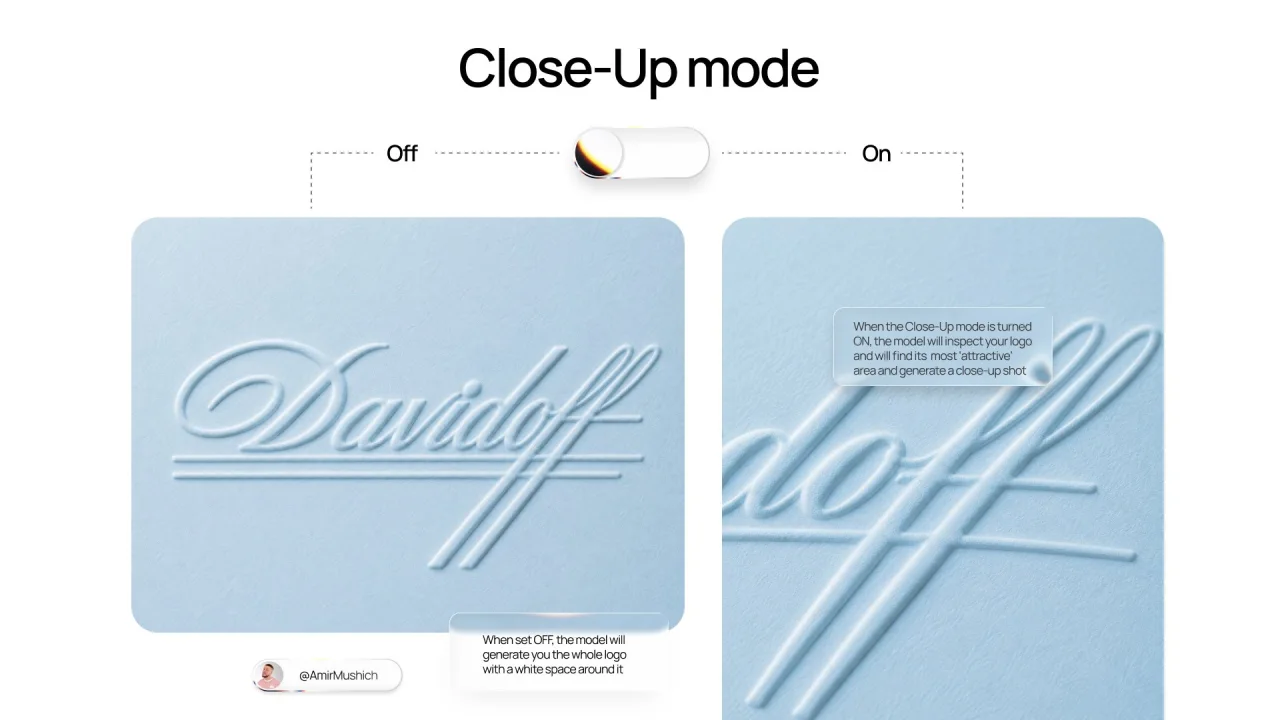
[EDITORIAL CLOSE-UP = on/off]

Create a close-up macro studio photograph of the authentic official logo or wordmark of [BRAND NAME] as a blind embossed paper mark.

Automatically identify the brand's official logo or wordmark. Preserve its exact geometry, proportions, curves, spacing and negative spaces. Do not redesign, simplify or reinterpret the identity.

The logo must be physically formed from the same sheet of paper, not printed, engraved, painted or made from another material.

Create a clean raised emboss approximately 2–3 mm above the paper surface with broad rounded shoulders, generous curvature and smooth continuous transitions. The emboss should feel deeply pressed using a premium brass die, producing a sculptural form rather than a shallow surface deformation.

The top surfaces should remain gently convex rather than perfectly flat, allowing broad soft highlights to roll naturally across the relief.

Around the emboss, create only extremely subtle paper compression without wrinkles or excessive deformation.

Everything is made from one identical paper material.

Paper color:

[PAPER COLOR]

No color variation between the paper and the embossed logo.

MATERIAL

Heavy premium uncoated fine art paper similar to Colorplan or Gmund.

Dense smooth surface.

Extremely fine microscopic paper grain.

Tight paper fibers.

Soft velvety matte finish.

Almost silky appearance.

No gloss, foil, ink, varnish, laminate or metallic effects.

LIGHTING

One large diffused softbox positioned above and slightly left.

Very soft illumination with restrained fill from the opposite side.

Increase tonal contrast while keeping the lighting soft.

Create broad grazing highlights across convex embossed surfaces and richer shadow separation along lower transitions.

The relief should be revealed by gradual light falloff rather than hard shadows.

Maintain broad matte highlights with almost no specular reflections.

CAMERA

Macro product photography.

Slight three-quarter angle around 20–30°.

85–100 mm macro lens character.

Controlled shallow depth of field while keeping nearly the entire embossed area sharp.

COMPOSITION

If [EDITORIAL CLOSE-UP = OFF]:

Show the complete logo or wordmark.

Center the composition or apply a subtle offset.

The logo occupies approximately 60–80% of the frame.

If [EDITORIAL CLOSE-UP = ON]:

Treat the logo as abstract graphic sculpture rather than typography.

Ignore normal reading order.

Search the entire logo for the strongest visual composition created by curves, intersections, rhythm, negative space, overlapping strokes, changing line thickness and overall line flow.

For wordmarks, never default to the first letters. Search across the entire wordmark and choose the visually strongest composition regardless of reading order.

Compose the frame around this composition rather than around the logo itself.

Allow large portions of the logo to extend naturally beyond the frame.

The frame should feel discovered rather than cropped, as if searching through the logo with a macro lens until the strongest abstract composition naturally emerges.

Favor visual balance, elegant geometry and negative space over complete readability.

The result should feel like a luxury editorial photograph where abstraction and composition take priority, while the brand remains recognizable through its characteristic forms.

BACKGROUND

Only the same uninterrupted sheet of paper.

RENDER

Ultra-realistic studio photography.

Physically accurate paper fibers.

Extremely subtle surface texture.

Believable paper compression created by the embossing process.

Luxurious sculptural relief physically pressed into heavyweight paper.

NEGATIVE CONSTRAINTS

No printing.

No ink.

No foil stamping.

No deboss.

No bevelled 3D extrusion.

No plastic.

No metal.

No glossy coating.

No exaggerated paper grain.

No rough porous texture.

No decorative shadows.

No gradients.

No wrinkles.

No background elements.
Continue browsing
Related prompts
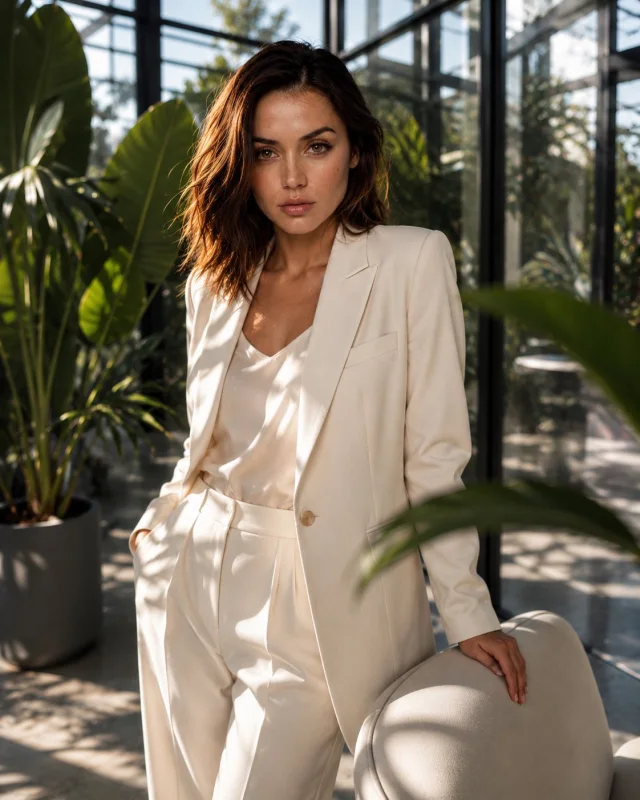
Luxury glasshouse editorial portrait
Create a high-end photorealistic fashion editorial portrait of a woman inside a contemporary glasshouse botanical studio, wearing an ivory tailored suit beside a sculptural chair, surrounded by tropical leaves, glass panels, and dramatic sunlight.
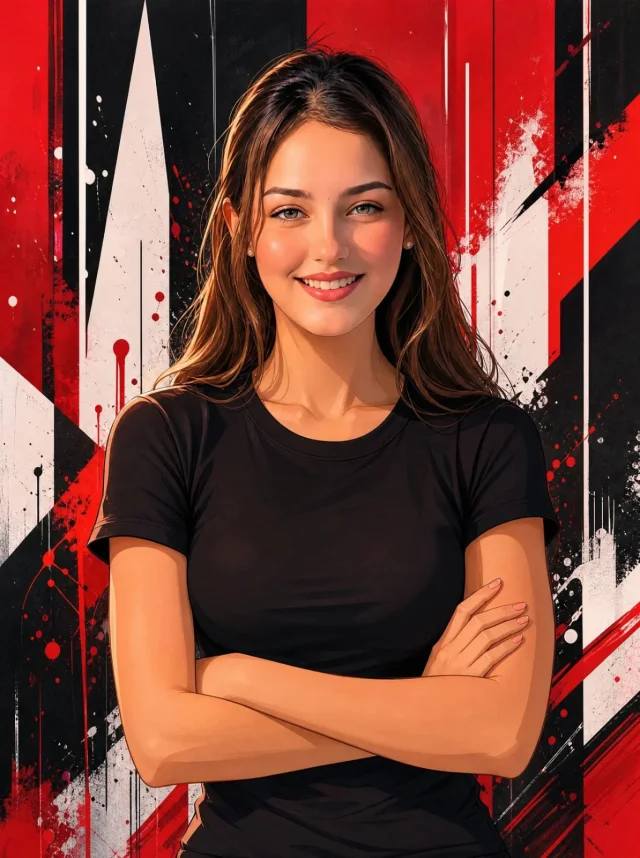
Anime graffiti face-reference portrait
Using a face reference, create a premium anime-style 9:16 portrait of a person in a fitted black t-shirt with crossed arms against a red, black, and white abstract graffiti background.
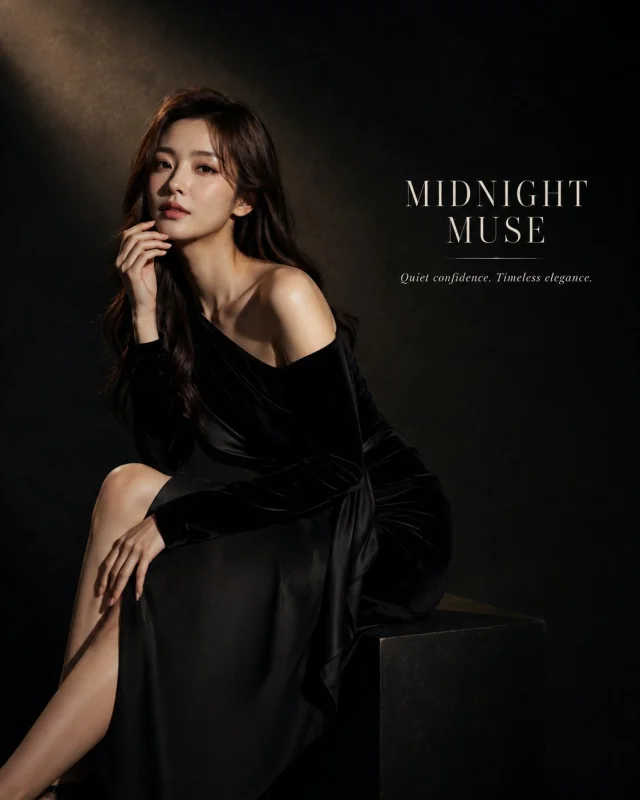
Korean editorial dark studio portrait
A master prompt for an ultra-realistic high-fashion editorial portrait of a Korean subject in a luxurious dark cinematic studio with dramatic lighting, minimal serif typography, and negative space.